Pressure Free Gaming for Quieter Evenings
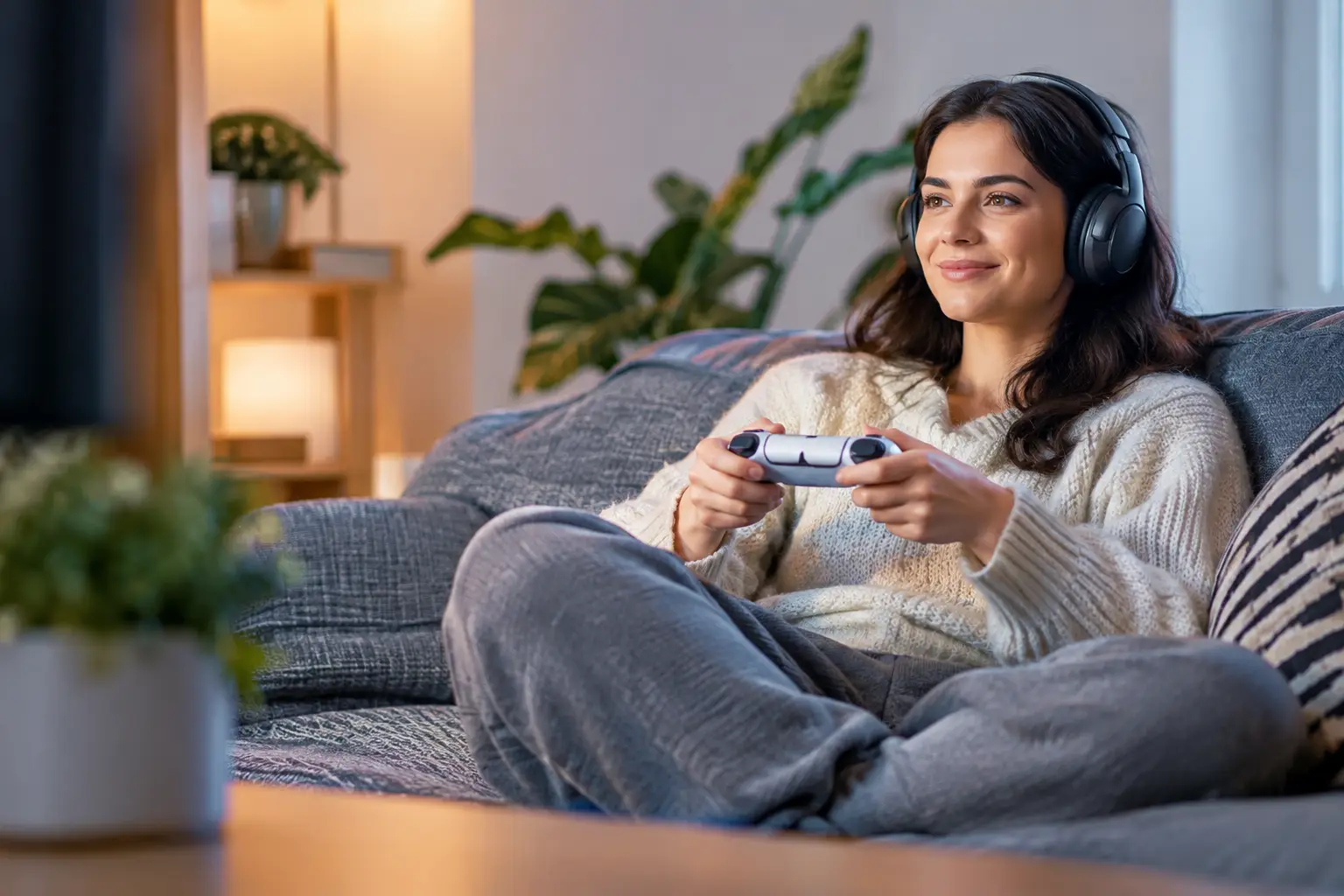
A phone can fill almost any spare minute with noise. A timer starts. A chest needs opening. A bright button asks you to return before the next reward disappears. Pressure free gaming takes a different view: a short break should feel like a break.
That does not mean games have to be empty, easy or without a little friction. A satisfying puzzle can ask you to pause. An arcade challenge can make your thumb tense at the edge of a high score. The difference is who sets the pace. When the game leaves room to think, retry, stop and return, play becomes something you can keep close rather than keep up with.
What pressure free gaming feels like
The feeling often begins before the first tap. A clear screen makes its invitation without shouting. There may be a shape to place, a word to notice, a path to steer along or a colour waiting to find its partner. You understand enough to begin, then learn through your hands.
Good low-pressure design does not bury the player beneath instructions or systems. It gives one strong interaction room to breathe. Tap, drag, match, merge, turn. Repeating a simple action can become unexpectedly absorbing when the response is crisp: a piece settles into place, a line clears, a bright gap appears where the board was crowded a moment ago.
There is a useful distinction here. Calm is not the same as passive. A game can be quiet and still ask for attention. It can be gentle in presentation while giving you a sharp little problem to solve. The aim is not to remove challenge, but to remove the sense that a missed moment has somehow become a failure.
Progress without being chased
Many mobile games measure progress loudly. Levels, streaks, currencies, daily tasks and limited events can all offer structure, but together they can turn a hobby into an appointment. Some players enjoy that rhythm. For others, especially after a busy day, it makes even a simple game feel crowded.
Pressure free play treats progress as something you notice rather than something that pursues you. You might improve at reading a puzzle board, survive a little longer in an endless run, or make a new arrangement that simply looks right. The reward is in the growing familiarity of the interaction.
This approach suits short sessions particularly well. Five minutes waiting for a train is enough time to make a few decisions and leave with a satisfying sense of completion. So is a quiet ten minutes before bed, when the last thing you want is a flashing prompt telling you that now is the only moment to act.
Why pace matters on a small screen
A mobile game lives alongside messages, calendars, maps and the rest of daily life. It needs to earn attention without demanding ownership of it. Player-led pacing respects this setting. You can put the game down when the kettle boils, resume after a call, or close it because you have had enough.
That freedom changes the texture of play. A puzzle without a countdown lets the answer come into focus. You can look away, return, and see the board differently. A one-touch game without a punishing restart can turn failure into useful information: next time, steer a fraction earlier. A creative toy without a score asks a more interesting question: what happens if I try this?
None of this rules out intensity. There is a place for fast reactions, close calls and scores worth chasing. The trade-off is in how the game frames them. An optional high score is an invitation. A system that treats every pause as a lost opportunity is a demand.
The small design choices that reduce pressure
Pressure is rarely created by one feature alone. It arrives through many tiny decisions: an interruption after every round, a confusing menu, an energy bar, too much visual movement, or a reward that is always one more tap away. The opposite is built with the same care.
A clear beginning helps. The first moments should make the central action understandable without a long tutorial. If a game is about placing pieces, let players place one. If it is about words, show the letters and allow a thought to form. Confidence grows from contact with the mechanic, not from a wall of explanation.
Predictable feedback matters too. When an object moves as expected and a successful action has a pleasing response, the player can focus on choice rather than translation. This is where tactile design earns its place. Small sounds, gentle movement and clean visual contrast can make an interaction feel considered without turning every success into a celebration.
The absence of clutter is also active design. Fewer competing icons leave more room for the game itself. A restrained interface can make sharp corners, shifting colours and small animations easier to notice. It gives the player a place to rest their attention.
Finally, a pressure-free game should make stopping feel normal. Save state, natural round endings and the ability to return without penalty are not glamorous features, but they are generous ones. They acknowledge that a game is part of a life, not a replacement for it.
Choosing games for the mood you are in
The right kind of calm game depends on the kind of quiet you need. Some evenings call for a word puzzle, where each attempt is a slow adjustment of possibilities. Other moments suit a tactile sorting or matching game, when it is satisfying just to bring disorder into shape.
An endless arcade game can also belong here. Its movement may be quick, but its rules can remain simple and honest. Start, steer, try again. The pleasure comes from learning a small rhythm rather than from managing a web of upgrades. For a commute or queue, this can be exactly enough.
Creative play offers another kind of release. A small interactive app can become your own pocket studio: a place to arrange, combine or experiment without being asked to produce a masterpiece. There is no need to optimise a private moment of curiosity.
It depends on what drains you. If work has involved too many decisions, look for one-touch play and immediate feedback. If the day has been noisy, choose a puzzle with space around it. If you feel restless, a fast, repeatable challenge may settle your attention better than something slow. Low pressure is not one tempo. It is the ability to choose your own.
A quieter relationship with games
There is no virtue in pretending every game must be relaxing. Some are built for competition, spectacle and the thrill of being tested. Those experiences can be wonderful when you want them. But they should not be the default setting for every idle minute on a phone.
Thoughtful mobile games make space for a different relationship. They can be small crafted objects: clear in purpose, pleasant to handle and ready when you are. Their mechanics may be modest, yet a well-judged tap or a neatly solved arrangement can carry more satisfaction than a screen full of promises.
At Tom Makes Games, that idea guides games made for the small gaps in a day, where a simple action can become a rewarding moment. The best session may not end with a fanfare. It may end when you set the phone down feeling a little more settled than when you picked it up.