12 Best Downtime Games for Quiet Minutes
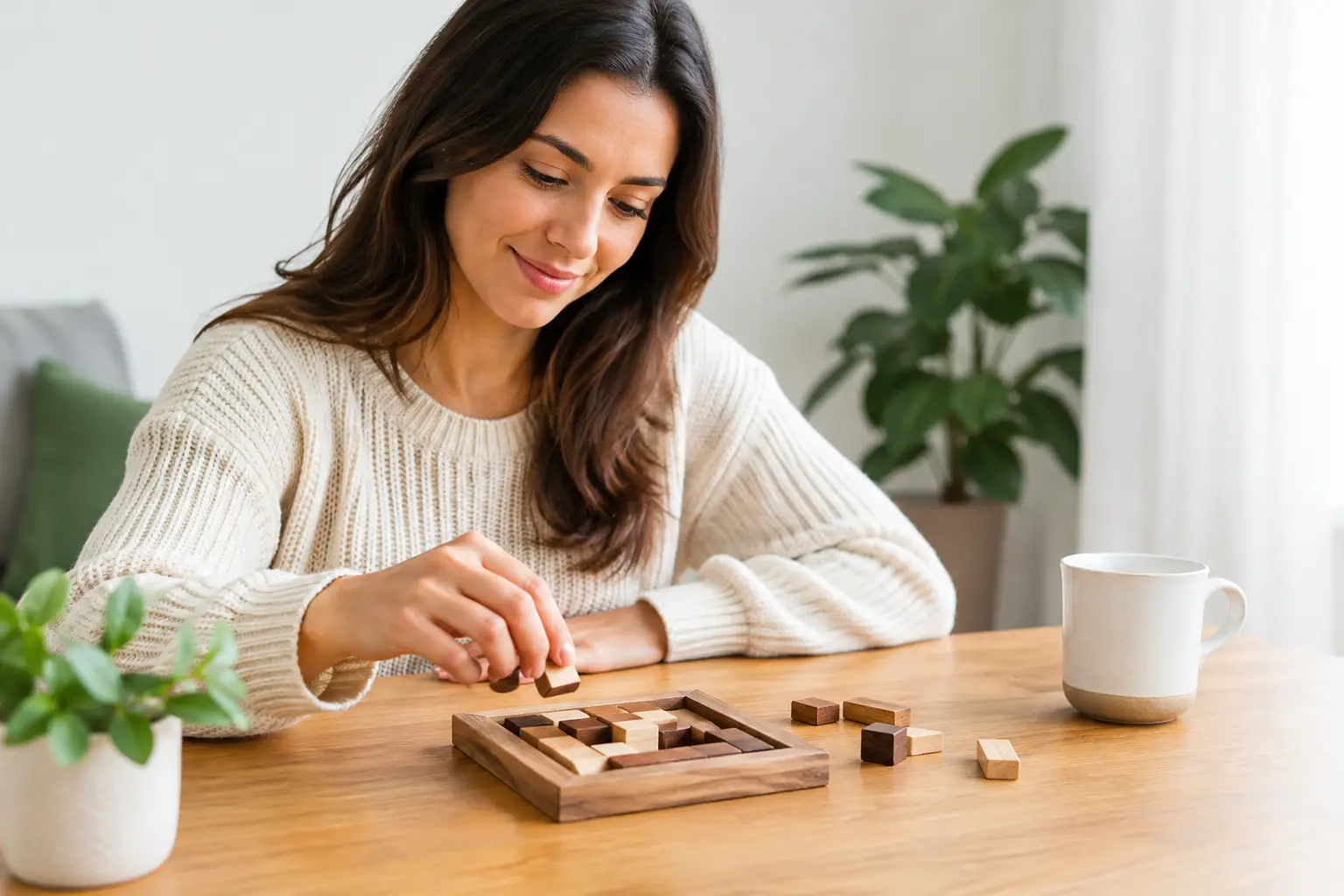
A delayed train, a queue that barely moves, ten minutes before sleep: these are the moments that ask for a game with a light touch. The best downtime games do not demand a headset, a weekly commitment or perfect reflexes. They give your hands something satisfying to do, leave room for thought, and let you put the mobile phone down without feeling that you have failed a mission.
For iPhone and iPad players, that usually means a clear idea beautifully carried through. A good short-session game can be a puzzle that lets the answer come into focus, a small landscape crossed at your own pace, or a story with the shape of a quiet afternoon. The right choice depends on your mood. Some games offer gentle concentration; others are better when you want to make a quick, bright dent in the day.
What makes the best downtime games work?
Downtime is not always relaxation. A packed commute may call for something absorbing enough to soften the surrounding noise, while a quiet evening may suit a slower puzzle. The common thread is respect for the player. Good downtime games explain themselves quickly, make each action feel deliberate, and avoid punishing you for leaving halfway through.
Look for play that works in small pieces. A single puzzle, one run, one chapter or a few minutes of arranging colours is often enough. Clean controls matter too. Tapping, swiping, placing and steering should feel tactile rather than fussy, especially on a mobile phone screen. And while online features can be useful, it is worth checking a game's current App Store details for its price, adverts, data practices and offline support before buying. Those details can change.
12 of the best downtime games for iPhone and iPad
1. Monument Valley 2
Monument Valley 2 turns impossible architecture into a calm, touchable puzzle box. You rotate towers, open paths and guide a mother and daughter through soft-coloured spaces where perspective is part of the solution. Its chapters are short enough for a break, but the visual ideas linger longer.
It is a lovely choice for a slower moment, though players who want endless replayability may find its carefully composed journey brief. That is also part of its appeal: every scene has a purpose.
2. Alto's Odyssey
Alto's Odyssey makes one-touch snowboarding feel unhurried. You guide a rider across dunes and canyons, timing jumps and backflips while the landscape changes around you. There is skill in chasing a high score, but a gentle run can be rewarding without it.
The game suits moments when a puzzle feels too still and you want a little motion without the sharp corners of a competitive match.
3. Threes!
Threes! is a small number puzzle with an unusually satisfying rhythm. Slide a grid of tiles, join matching values, and try to leave enough space for the next decision. The rules arrive quickly; the consequences take longer to understand.
A round can last only a few minutes, yet each move has weight. It is ideal for players who enjoy planning but do not need a game to explain every good choice aloud.
4. Mini Metro
Mini Metro asks you to draw underground lines between growing stations, then quietly watch a city begin to test your layout. The design is spare, but the decisions are not. A loop that looked tidy a moment ago can become a bottleneck as new shapes appear.
It is one of the best downtime games for people who enjoy organising systems. The trade-off is that a successful session can become surprisingly absorbing, so it is perhaps not the best pick when you truly have only two minutes.
5. Good Sudoku
Good Sudoku takes a familiar grid and gives it a thoughtful digital shape. Notes, gentle guidance and a clean interface help you work through the logic without turning the puzzle into a race. It respects the pleasure of making the next square certain.
Choose it when you want concentration with a clear finish line. A single puzzle can be picked up over several breaks, making it particularly good for the rhythm of a commute.
6. Prune
Prune is about helping a tree grow towards the light. With a swipe, you cut away a branch; with care, you shape a living line around obstacles and towards coloured sunlight. It feels less like solving a conventional puzzle and more like making a small, considered drawing.
The controls are simple, but the result has a personal quality. It is a fine choice when your hands want something gentle and precise.
7. A Dark Room
A Dark Room begins with almost nothing: a fire to tend and a few quiet lines of text. Gradually, it becomes a resource game, then something stranger and more expansive. Its stripped-back presentation leaves plenty of space for imagination.
This is downtime play for readers and tinkerers. It can run in tiny visits, although its long arc may encourage the kind of "just one more check" that makes a short break stretch pleasantly.
8. Florence
Florence is a short interactive story about first love, routine and the shape of a relationship over time. Its mini-games are deliberately simple: arranging panels, brushing teeth, fitting speech bubbles together. The interaction serves the feeling of each scene.
It is best approached when you have space for a complete sitting rather than a distracted queue. Think of it as a small illustrated story you can hold in your hands, not a game for collecting scores.
9. Hidden Folks
Hidden Folks fills hand-drawn worlds with tiny people, animals and odd little happenings, then asks you to find particular details within the crowd. Tapping and unfolding parts of the landscape reveals jokes tucked behind trees, tents and washing lines.
It is a warm alternative to a word search. There is no need for fast reactions, and every successful find creates a neat click of progress. On an iPad, the extra space makes its busy scenes especially inviting.
10. Assemble with Care
In Assemble with Care, you take apart cherished objects, repair their mechanisms and learn a little about the people who own them. A camera, a music player or a small toy becomes a tactile set of screws, wires and components.
The pleasure is in the handling. It gives the sensation of mending without the worry of losing a real spring beneath the sofa. Its story-led structure means it is more of a contained experience than a forever game.
11. Really Bad Chess
Really Bad Chess changes the pieces on the board but keeps the basic rules of chess. You might begin with several queens, too many knights or a pawns-only kind of problem. Familiar openings disappear, and careful improvisation takes their place.
It is excellent for players who like chess but are tired of feeling behind before the first move. The strange starting positions make each match feel fresh, even when you only have time for one.
12. I Love Hue Too
I Love Hue Too asks you to restore mixed-up tiles into smooth fields of colour. There are no enemies, timers or loud rewards, only small shifts in hue until the whole board settles into order. The final gradient can feel like finding a bright gap in a grey afternoon.
This is a particularly good fit for low-energy play. The challenge grows gradually, but the activity remains calm: notice, compare, place, and let the colours resolve.
Choose the game for the moment you have
A good downtime game is not necessarily the shortest one. It is the one that matches the attention you can spare. For a three-minute pause, Threes! or I Love Hue Too gives you a clean, complete action. For a longer journey, Mini Metro and A Dark Room create a system you can return to. When you want to slow down rather than fill time, Prune, Monument Valley 2 and Assemble with Care make touch itself part of the pleasure.
It is also worth keeping more than one kind of game on your home screen. One day, a sharp little puzzle is exactly right; another, you may prefer to steer through a quiet landscape or rearrange a handful of colours. The best small games do not compete for every spare second. They wait patiently, ready to make a few minutes feel like they belonged to you.