Why Tactile Puzzle Games Feel So Good to Play
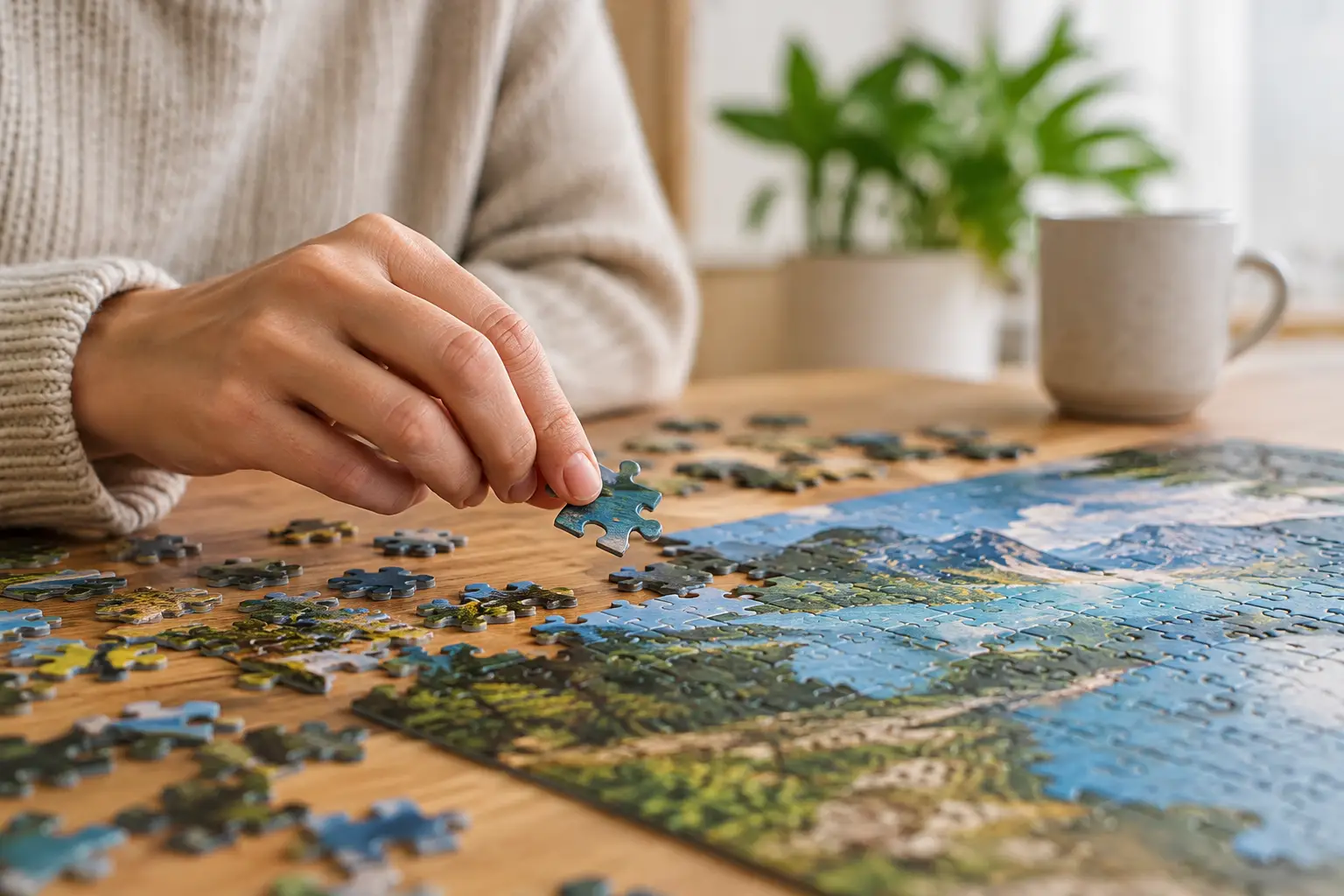
A good puzzle can begin with something very small: a tile settling into place, a shape turning beneath your thumb, a bright gap appearing where there was clutter a moment ago. Tactile puzzle games make those small actions the point. They ask for attention, but not urgency. They turn a spare few minutes on the train, sofa or waiting-room chair into a sequence of neat decisions that feels good in the hand.
That quality is easy to mistake for decoration. A soft sound, a pleasing animation and a clean palette certainly help, but tactility runs deeper than polish. It is the sense that every tap has weight, every move has a clear consequence, and the screen is responding directly to you rather than simply displaying a result.
Tactile puzzle games begin with clear contact
A touch screen has no buttons to press, no pieces to pick up and no board to lean over. It can still feel physical when a game makes the relationship between finger and action immediate. Dragging a block should feel like moving a block, not issuing a distant instruction. Joining colours should produce a visible change with enough pace and resistance to make the result land.
The best interactions are usually simple enough to understand before any instructions appear. You tap to place. You swipe to turn. You hold, release, match or merge. The rule is clear, then the interest comes from where that rule leads.
This is particularly valuable on iPhone, where play often happens in fragments. A game that needs several menus, a long tutorial or both hands before it becomes enjoyable has already asked a lot. A tactile puzzle can meet a player where they are, offering a small, legible problem and a satisfying way to touch it.
There is a useful distinction here. Simple does not mean empty. One-touch controls can support surprisingly rich choices when the board, timing or placement creates tension. The player may only have one action available, but its position can change everything.
The pleasure is in the feedback loop
Tactility is built from feedback. A puzzle game needs to tell you what happened without turning every move into a fanfare. The response might be a click, a soft pulse of colour, a tile that eases into alignment or a score that climbs with quiet confidence. Each element says: yes, that worked. Or: not quite, try another angle.
Good feedback also gives the player room to think. If movement is too fast, too noisy or too dramatic, the result can feel slippery. The action has happened before the mind has caught up. If it is too slow, the game loses its rhythm. There is a sweet spot where an object appears to have a little presence on screen, while still following your hand closely.
Sound has a particular role. A short, crisp note can make a successful match feel complete; a warmer tone can make a chain reaction feel generous. Silence matters too. A calm puzzle should remain comfortable with the volume off, on a quiet evening or in a crowded carriage. Audio can support the touch, but it should not be the only proof that a move mattered.
Visual clarity is part of that same loop. Strong contrast, recognisable shapes and a limited set of colours make the next decision easier to read. This is not merely an accessibility consideration, though it is certainly that. It also lets the player stay in the flow of the puzzle. They spend less effort decoding the board and more on seeing a possibility come into focus.
Why calm challenge lasts longer
Many mobile games use pressure as their main ingredient: timers, streaks, alerts and a constant suggestion that someone else is getting ahead. That can be exciting in the right moment. It can also make a five-minute break feel like another thing to manage.
Tactile puzzle games often work best when they offer a different kind of attention. The challenge remains real, but the pace belongs to the player. You can pause over a difficult arrangement. You can undo a thoughtless move, depending on the design. You can set a personal aim, such as clearing one more row or finding a tidier solution, without being told that failure is a catastrophe.
This does not mean every puzzle needs to be gentle. Sharp corners are useful. A difficult board, a dwindling amount of space or a choice between two promising moves can create real tension. The difference is that the tension grows from the system itself. It is not pasted on with flashing warnings.
Player-led pacing also makes short sessions feel complete. A single round can have a beginning, a middle and a small ending: a pattern resolved, a high score nudged upwards, a crowded board brought back under control. That is rewarding progress, even when there is no sprawling map or daily obligation attached.
A small screen can hold a proper puzzle
There is a lingering idea that mobile puzzles must be simplified versions of something larger. In practice, the small screen can be a strength. It encourages designers to remove excess and concentrate on the central gesture.
Consider the difference between a puzzle with ten tools and one with a single elegant verb. The first may offer more immediate variety. The second can become more memorable if that verb is satisfying enough and its consequences continue to unfold. Rotating, placing, connecting or sorting can carry a whole game when the rules create new situations rather than repeating the same one.
The trade-off is that minimal games have nowhere to hide. When there are few mechanics, the feel of each one matters more. A slightly awkward drag, an unclear target or a crowded interface can spoil the whole object. A designer has to be precise about hit areas, motion, contrast and the moment a player understands why a move succeeded.
That precision is one reason compact games can feel carefully made. They are not asking you to admire a vast amount of content. They are asking you to notice a particular interaction, then return to it because it keeps revealing a little more.
Tactile does not mean frictionless
A satisfying puzzle should not remove every obstacle. If every move is automatically corrected and every pattern resolves itself, there is little for the player to contribute. The pleasure comes from agency: seeing the answer, choosing it, then feeling the game acknowledge that choice.
The right amount of friction depends on the mood. A calm colour-matching game may benefit from generous placement and forgiving rules. A spatial puzzle may need stricter boundaries so that a precise fit feels earned. An arcade-leaning game can ask for faster reactions, as long as its controls remain honest and its failure state invites another go rather than a sigh.
Fairness is central. When a move goes wrong, players should be able to understand why. Did the shape not fit? Did the chain break? Did the available space run out? Clear cause and effect turns a setback into information. Confusing cause and effect turns it into annoyance.
That is also why clutter is the enemy of tactile play. Buttons, pop-ups and competing prompts interrupt the physical conversation between player and game. A clean board lets the hands and eyes work together. The next move stays visible. The bright gap is still there, waiting to be filled.
The case for puzzles that respect a quiet moment
There is real value in a game that does not demand a performance from its player. You do not need to announce that you are playing it, assemble a team or learn a season's worth of systems. You can simply open it, make a few good decisions and put it away again.
For Tom Makes Games, that is part of the appeal of designing games as small crafted objects. A compact puzzle can be playful without being noisy, and thoughtful without becoming heavy. It can leave room for the player's own rhythm: a quick attempt between tasks, or a longer stretch spent chasing a cleaner arrangement.
The most memorable tactile puzzles understand that satisfaction is not a prize held at the end of a long grind. It is present in the immediate details: the turn of a shape, the soft snap of a match, the moment a messy board becomes readable again.
Next time you have a few unclaimed minutes, look for a puzzle that gives your thumb something clear to do and your mind somewhere calm to go. The answer may arrive one small, satisfying movement at a time.