Why Drop and Merge Puzzle Games Feel So Good
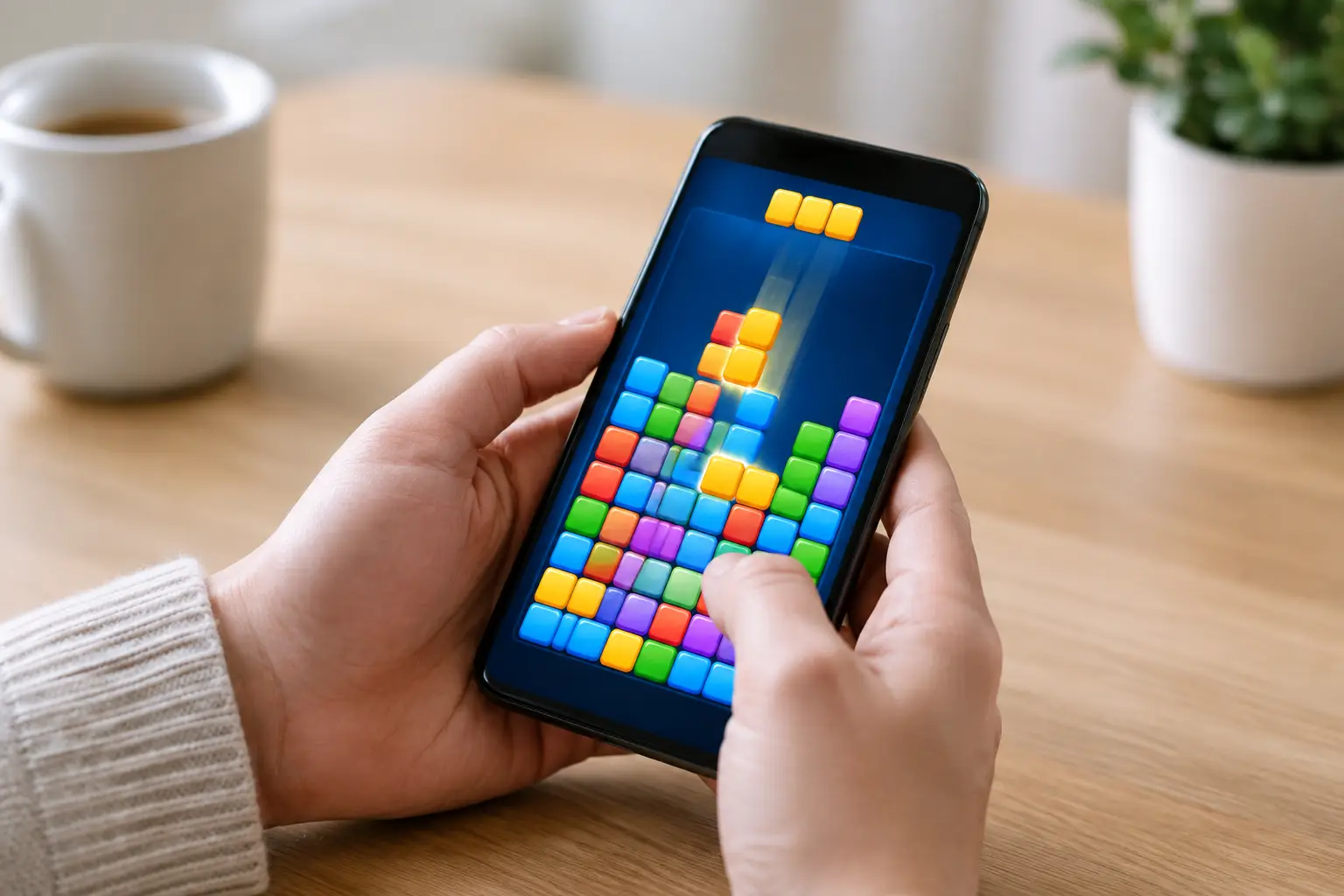
A piece lands. Two matching shapes meet. The board changes just enough to make the next move feel possible. Drop and merge puzzle games are built from these small moments: a simple gesture, a clear result, and a fresh little problem waiting in the bright gap that remains.
They can look almost too simple at first. Drop an item, combine identical pieces, make room, repeat. Yet that small rule set creates a satisfying tension between planning and chance. The best versions feel easy to begin, but they leave room for a player’s own habits, hunches and tiny flashes of foresight.
A puzzle you can feel
A good merge puzzle does not need a crowded board or a page of instructions. Its pleasure begins with cause and effect. You place something, it falls or settles, and the game answers immediately. Perhaps two tiles become one larger tile. Perhaps a cluster clears away. Perhaps the new shape rolls into an awkward corner, changing everything.
That response matters. On a phone or tablet, touch is the whole conversation. A drop should feel weighty without being slow. A merge should have a crisp visual cue, a neat sound, or a little burst of colour that says: yes, that worked. These are not merely decorations. They help the player read the system through their hands.
The strongest interactions are often the quietest. There is no need for a fanfare after every move. A soft click, a gentle bounce and a clean bit of motion can make an ordinary action feel like a small crafted object. The board becomes legible because it behaves consistently.
Why drop and merge puzzle games suit short breaks
Many games ask for commitment before they offer enjoyment. They need a tutorial, a match, a team, a mission or a long stretch of concentration. Drop and merge puzzle games can begin somewhere smaller. A spare minute while the kettle boils is enough time to make three careful placements and see a plan take shape.
This does not make them shallow. It changes where the challenge lives. Instead of remembering a complicated control scheme, you are looking at the board and asking a practical question: where can this go without making a mess?
That question grows as the space tightens. An early move might be almost obvious. Later, one poorly placed piece can block a useful route, leave a lonely tile stranded, or fill the exact square needed for a satisfying chain. The pressure comes from the board, not from a countdown shouting for attention.
There is a useful trade-off here. A game with very little randomness can reward careful planning, but may become familiar once its patterns are understood. A game with more unpredictable drops stays lively, though it can sometimes frustrate a player who had a precise plan. The sweet spot gives you enough information to make meaningful choices, while leaving just enough uncertainty for each run to feel alive.
The pleasure of making space
Merging is not only about getting a higher number or a larger shape. At its most pleasing, it is about making space. A cramped board becomes breathable again. A difficult corner opens. Pieces that looked unrelated suddenly connect in a clean sequence.
That rhythm - gather, arrange, combine, clear - gives the genre its gentle momentum. Progress is visible. You do not have to wait for a score screen to know that something has gone well. The board itself looks calmer, tidier and more promising.
This is also why sharp corners are so important. An awkward edge is not a nuisance by accident. It gives a simple board character. It asks whether you will save a useful piece for later, build around the obstruction, or take a risk now to avoid a worse problem in two turns’ time.
The answer is rarely perfect. That is part of the appeal. You might spot a better move just after dropping a tile. Rather than feeling like failure, it can become a small lesson for the next run. Good puzzle design lets the answer come into focus through play, not through punishment.
Planning without overthinking
The most satisfying decisions are often local ones. You may not be able to map the whole board ten moves ahead, and you should not need to. It is enough to notice that a merge on the left will free a lane, or that keeping one medium piece available will stop a pile-up at the bottom.
A useful rule of thumb is to protect flexibility. Keep a little open space where possible, avoid sealing off a lone piece too early, and do not spend every matching pair the moment it appears if waiting could create a larger chain. But rules are not instructions. Sometimes the bold move is the right one, especially when the board is already crowded.
That balance is what makes a simple drop feel thoughtful rather than automatic. You are not just matching. You are composing a temporary arrangement, then watching it change under your fingers.
Calm does not mean consequence-free
A relaxed game can still have stakes. In fact, a board that gradually fills can create a wonderfully focused kind of tension. There is no villain, no loud timer and no need to perform for anyone else. There is simply less room than there was a moment ago.
For some players, a hard fail state is part of the flavour. Reaching the end of a run makes each placement matter, and starting again can be pleasantly clean. For others, endless play, undo options or gentler recovery tools make the experience more welcoming. Neither approach is automatically better. It depends on whether the game wants to feel like a compact challenge or a quiet place to think.
The key is honesty. If a poor placement can end a run, the player needs to understand why. If chance plays a large part, the game should offer enough opportunities to recover that a bad draw does not feel arbitrary. Clear rules earn trust, especially in a game designed for short, unhurried sessions.
What makes a merge game worth returning to
The best drop and merge puzzle games give players a reason to come back without turning that return into an obligation. A new personal best can be satisfying, but it is not the only form of progress. You might return because you want to find a cleaner opening, because a particular arrangement is pleasing to make, or simply because the motions feel good.
Visual clarity helps enormously. Pieces should be easy to distinguish at a glance, particularly on a smaller iPhone screen. Colour can guide the eye, but shape, size and position should do some of the work too. A player should not lose because two pieces were difficult to read.
Sound deserves the same care. A merge can have a warm little note; a blocked move can have a restrained signal rather than an alarm. Played with headphones or in a quiet room, these details turn the game into a small pocket ritual. Played silently on a train, the board should still make complete sense.
For an independent game, this focus can be a real strength. Rather than adding endless modes and distractions, a carefully considered core can carry the whole experience. One mechanic, polished until it has its own texture, can be more memorable than a dozen features competing for attention.
A small board, a personal rhythm
There is something generous about a puzzle that lets you set the pace. You can make one move and put it down, or follow a promising chain for twenty minutes. You can play cautiously, chasing order, or enjoy the occasional glorious collapse and begin again with a clearer idea.
That is the lasting charm of the genre. A falling piece is a very small event. But when it lands in exactly the right place, clears a little room and sends the board into motion, it can make an ordinary pause in the day feel wonderfully complete.