Stacking Puzzle Games for iPhone That Feel Good
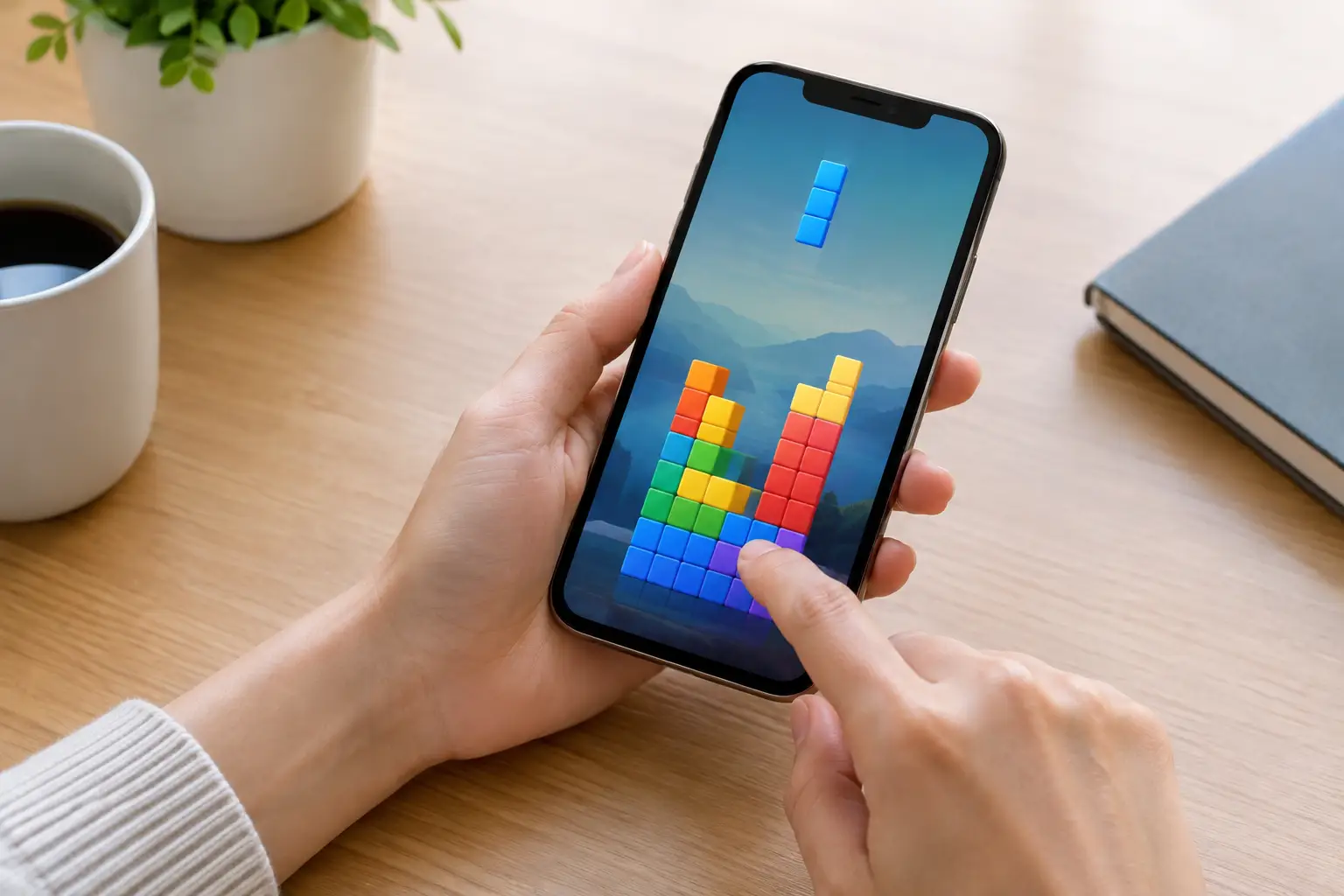
A block lands with a soft click. A row clears. The shape you thought would spoil the board finds a bright gap at the last second. The best stacking puzzle games for iPhone make these small decisions feel physical, even through a glass screen.
They are a good fit for the moments mobile games are actually made for: waiting for the kettle, sitting on a train, taking five quiet minutes before bed. There is no need to learn a long move list or keep up with a busy world. You look at the pieces, make a choice, and watch the board change beneath your fingertips.
What makes a stacking puzzle satisfying?
Stacking games begin with a simple premise: place shapes on a limited board. The interest comes from the pressure that grows around that simplicity. Every placement removes a little space while creating another possibility. A neat square might clear a line now; an awkward corner piece may be worth saving for later.
That push and pull is why the genre has lasted. It gives you a puzzle that can be understood in seconds but not exhausted in seconds. You are not merely fitting shapes together. You are arranging future options.
On iPhone, the strongest versions respect the size and character of the device. Pieces should be easy to read at a glance. A tap, drag or swipe should feel direct. Colour can help separate forms without turning the screen into noise. When an action succeeds, the response should be clear: a click, a small burst of motion, a satisfying disappearance of clutter.
The aim is not to make every move dramatic. It is to make every move legible. A calm board lets the next answer come into focus.
Stacking puzzle games for iPhone work best in short sessions
A good mobile stacking game does not demand an hour of attention before it becomes interesting. The first few moves should already give you something to solve, whether that is finding room for an L-shaped piece or choosing which nearly-complete row to protect.
Short sessions do not mean shallow sessions. In fact, a compact board can make a game more thoughtful. With only a handful of open spaces, placement becomes meaningful quickly. You may stop after two minutes because your stop has arrived, then return later and immediately understand the state of play.
This matters more than a grand progression system for many players. A score can be satisfying, but the board itself is the real record of your thinking. A tidy arrangement feels earned. A messy board is an invitation to recover, not a reason to be scolded.
Some games add daily challenges, timers or shifting rules. These can bring useful variety, especially if you already know the basic mode well. But they should feel optional. The most relaxing stacking puzzles leave room for your own pace, allowing you to linger over a tricky arrangement rather than hurrying towards an arbitrary finish line.
The board is the real puzzle
It is tempting to judge a stacking game by its pieces alone. Are there squares, bars, triangles, odd little zigzags? Yet the board shape often does more to define the experience.
A square grid rewards familiar line-clearing instincts. You can scan across and down, spot a nearly finished row, and plan around the gaps. A hexagonal board changes the rhythm. Neighbours meet at different angles, and the cleanest placement may be less obvious. A board with fixed obstacles turns each round into a small piece of spatial planning.
There is no single best approach. A simple grid is often more welcoming on a small screen, while unusual layouts can give experienced players a fresh way to think. What matters is that the board explains itself. You should be able to see why a move worked and why another left an awkward hollow behind.
The most memorable moments tend to arrive when a board looks finished, then reveals one last route through. A narrow channel becomes useful. A spare corner holds exactly the piece you needed. The answer was present all along, waiting for the screen to become a little less crowded.
Clear feedback makes placement feel tactile
Touch controls can make stacking puzzles feel wonderfully close at hand, but only when they are dependable. If a piece snaps somewhere unexpected, or a finger hides the crucial gap, the spell breaks. The game should make its rules visible before it asks for precision.
Subtle previews are especially useful. Showing where a piece will land gives confidence without solving the puzzle for you. A gentle animation when rows clear makes the reward felt rather than merely counted. Sound, if used, should be crisp and optional: a quiet confirmation, not a slot-machine fanfare.
This is where considered design earns its place. The difference between a serviceable puzzle and one you want to keep on your phone is often found in the smallest details: the pace of a drop, the clean edge of a tile, the brief pause before a full row vanishes.
Choosing the right kind of stacking game
The right stacking puzzle depends on what you want from the next ten minutes. If you want to settle your mind, look for generous undo options, no timer, and a board that remains readable as it fills. These games make good companions for quiet evenings because they let you experiment without turning every mistake into a penalty.
If you enjoy chasing a sharper challenge, a score-focused game may suit you better. Here, the pleasure lies in making efficient clears, keeping the board open, and learning the patterns that lead to a longer run. Pressure can be enjoyable when it comes from the puzzle rather than a constant demand to buy, watch or return.
Visual style is not just decoration, either. Soft colours and spacious layouts can make a dense puzzle easier to read. Brighter palettes and lively effects can add energy when the rules are very simple. Neither is inherently better, but the look should support the action. If the pieces blend into the background or the score competes with the board, the design is working against the game.
It is also worth considering how a game treats interruption. iPhone play happens between other things. You may need to put the phone down when a message arrives or the train reaches your station. A stacking game that preserves your board cleanly and returns you to it without fuss respects the way people actually play.
Progress without pressure
Many mobile games confuse progress with accumulation: more currencies, more menus, more daily chores. Stacking puzzles can offer a different kind of progress. You become better at seeing space.
At first, you place the largest piece wherever it fits. After a few rounds, you begin to notice which gaps are dangerous. You learn to leave flexible areas near the middle of the board. You resist the tempting clear that would create a sharp, unusable corner. None of this needs a tutorial pop-up or a level gate. Your eye simply changes.
That quiet learning is one of the genre's best qualities. It meets you where you are. A first-time player can enjoy fitting clean shapes together; someone returning for the hundredth round can pursue a more elegant arrangement. The same rule set holds both experiences.
For a small independent game, this clarity is valuable. A single well-made interaction can carry a surprising amount of play when it has room to breathe. There is pleasure in a game that trusts the player to notice its patterns rather than explaining every possible thought.
Make room for one more piece
The next time you are choosing a puzzle for your phone, look for the feeling rather than the feature list. Does the board invite a closer look? Are the pieces distinct? Does a good move create a little moment of relief? Can you return after a busy day and still find your place?
The best stacking puzzles do not need to fill every spare second. They make a small space within it: a board, a few shapes, and one satisfying decision at a time.