11 Games for Quiet Evenings That Feel Just Right
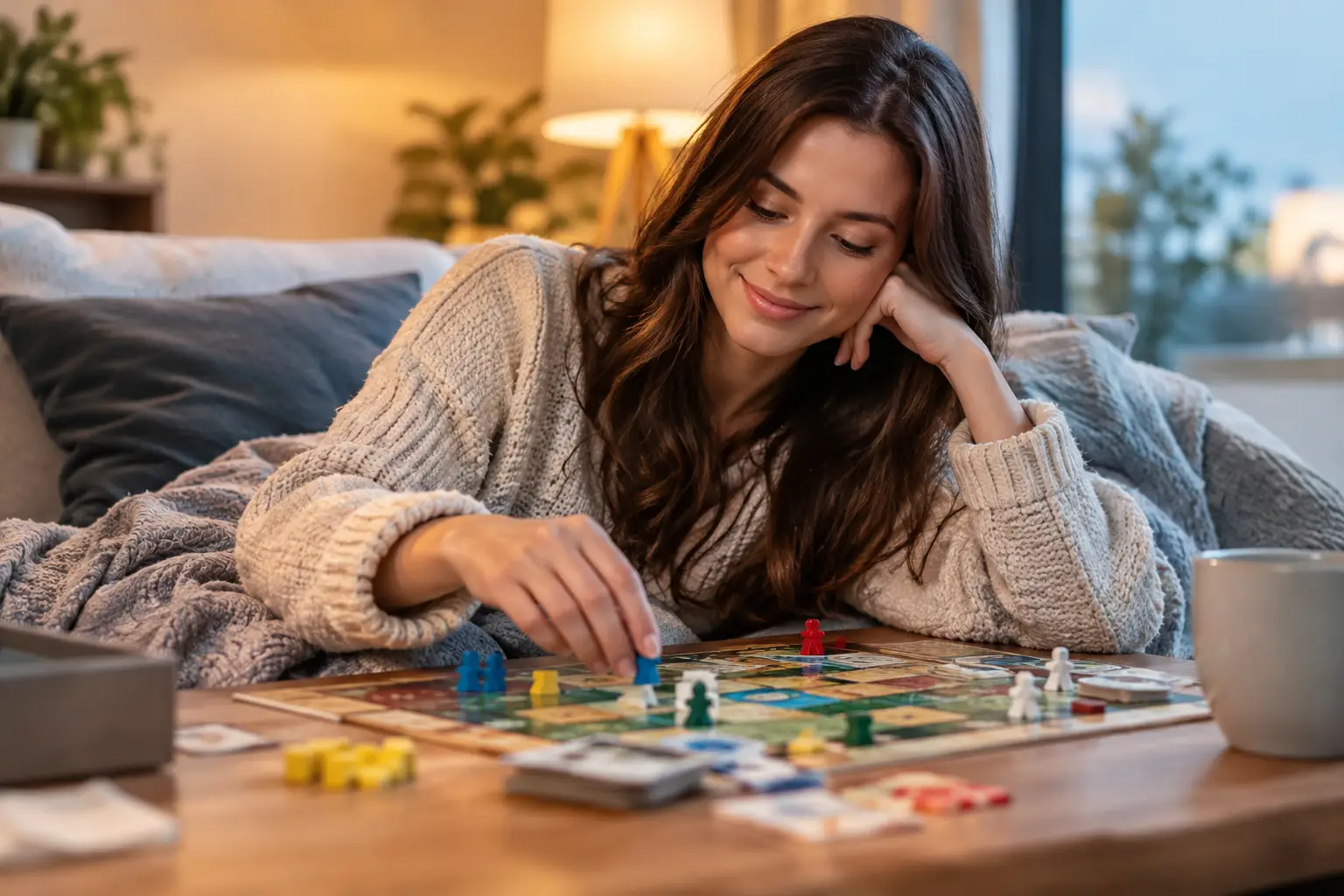
The room is finally still. Your tea has gone from too hot to just right, and the thought of joining a loud match or learning a sprawling new system feels like work. Games for quiet evenings belong in this small gap: something with a clear first touch, a pleasing response, and no need to prove anything.
That does not mean a quiet game has to be empty. A good one can ask for attention without demanding urgency. It can offer sharp little decisions, colours that settle into place, words that gradually come into focus, or a score that matters only because you would like to nudge it a little higher. The trick is choosing a game that suits the kind of quiet you have.
What makes a game right for a quiet evening?
The best choice is usually not about genre. It is about pressure. A puzzle can be wonderfully restful when you can leave it alone for a minute. An arcade game can work after a long day when its controls are simple and a failed run takes seconds, not an apology to three teammates.
Look for games that let you set the pace. They should be easy to pause, satisfying in short sessions, and clear enough that returning tomorrow does not require a recap. Sound matters too. Gentle sound can make an interaction feel physical, but a game should still feel complete with the volume low or off.
There is also a useful distinction between calm and dull. Quiet evenings still deserve surprise. The most memorable small games have a bright gap to spot, a neat rule to bend, or one more arrangement to try. They leave room for thought without filling every corner of it.
11 games for quiet evenings, by mood
1. A word puzzle with one clean idea
Word games are ideal when your mind is busy but not exhausted. The best ones give you a small set of letters, a simple clue, or a pattern to complete, then let the answer arrive at its own speed. There is satisfaction in seeing a messy arrangement resolve into a word you knew was nearby.
Choose a puzzle without a punishing timer if you want to unwind. A timed mode can be a lovely change of rhythm, but it turns a slow cup of tea into a race rather quickly.
2. A colour-matching game with tactile feedback
There is a particular pleasure in placing one colour beside another and watching the board become more orderly. Matching games suit quiet play when each move feels deliberate rather than frantic: tap, drag, combine, clear a little space.
The strongest versions are easy to read at a glance. You should be able to understand the state of the board without squinting through effects, offers and countdowns. A small click, pop or soft movement can do more than a screen full of spectacle.
3. A shape puzzle that rewards turning things over
Some puzzles are less about finding the correct answer than finding an arrangement that feels right. Rotating tiles, fitting shapes, folding paths and making corners meet can create a calm, desk-like focus. They are especially good on an iPad, where there is room to see the whole little system breathe.
These games work best when mistakes are cheap. If a piece is in the wrong place, you should be able to lift it, try again and enjoy the new possibility rather than feeling you have spoiled the board.
4. A gentle builder with no looming deadline
A tiny garden, railway, town or room can be a lovely place to spend twenty minutes. The pleasure comes from making decisions that are yours alone: where a path turns, which object sits in the empty corner, how a patch of colour balances another.
For a truly quiet evening, avoid builders that turn every action into a maintenance bill. A little structure gives creative play its shape; constant alerts make it feel like chores in a better typeface.
5. An endless runner for clearing the mind
This may sound like the opposite of calm, but a one-touch runner can be remarkably settling. When the rule is simply steer, jump or dodge, your attention narrows to the next clean movement. A short run provides a useful reset between the day and whatever comes after it.
It depends on the game’s temperament. Look for readable obstacles and quick restarts, not a barrage of sudden hazards. The goal is a light pulse of concentration, not clenched shoulders.
6. A solitaire-style card game
Cards bring their own quiet rhythm. You scan, sort, uncover and make a small plan. Familiar rules can be comforting, while a new variation adds just enough friction to keep your thoughts present.
Solitaire is particularly well suited to evenings because there is no social obligation attached to stopping. Finish a hand, or do not. Leave a nearly solved layout on the screen and return when the next move has had time to make itself known.
7. A cosy logic game with no score at all
Not every game needs a leaderboard, stars or an efficiency rating. Sometimes it is enough to guide a character home, connect a route, or make a series of small logical adjustments until the scene settles.
A score can be motivating, but it also changes what you notice. Without one, you may pay more attention to the route you chose, the pattern you made and the small satisfaction of understanding a rule properly.
8. A creative toy with room for mistakes
Creative apps and games sit nicely between play and making. Draw a looping pattern, arrange a collage, mix sounds, decorate a little space, then alter it without consequence. Your phone becomes a pocket studio rather than a stream of things asking to be answered.
The key is immediacy. If you need to watch a tutorial before making the first mark, save it for a more energetic hour. Good creative play begins with the first touch and gives you something pleasant to look at or hear almost immediately.
9. A merge game with a satisfying rhythm
Merging simple objects can be wonderfully absorbing. Two things become one, the board shifts, and a new choice appears. It is a small cycle, but a well-made version has enough uncertainty to stay interesting without becoming noisy.
Be wary of games that interrupt every few turns with currencies, chests and deals. The quiet pleasure is in the merge itself: seeing what fits, deciding what to save, and making space for the next useful combination.
10. A familiar classic with a modern surface
Chess puzzles, sudoku, mahjong, crosswords and peg games have lasted because their rules offer a dependable shape for thought. A thoughtful digital version can make them feel fresh through clear typography, considered colours and controls that disappear into the action.
Familiarity is an advantage on a tired evening. You already understand the language of the game, so your attention can go into one pleasing problem instead of learning a menu.
11. A small arcade challenge you can own
There is room for a little intensity, provided it stays personal. A compact score-chaser can become a quiet ritual: one attempt while the kettle boils, another before bed, a gradual improvement that belongs only to you.
The nicest arcade games make failure clean. You know why the run ended, you can start again at once, and a better line through the obstacles is already forming in your head. That is rewarding progress, not pressure.
Let the evening decide
A game can be beautifully designed and still be wrong for tonight. If your head is full, choose something physical and immediate: matching, steering, placing. If you want to think slowly, choose words, cards or logic. If the day has felt tightly scheduled, make something with no correct arrangement.
It also helps to give yourself permission to play briefly. Ten satisfying minutes count. Quiet games do not need to become a second screen-time job, a daily streak or a performance. Their value is often smaller and better: a focused little interaction, a cleared space, a solved corner, then the freedom to put the device down.
The best quiet-evening game leaves a faint afterglow rather than a demand for more. Choose the one that fits the room, follow the next small action, and let the rest of the day fall away for a while.